
Sleep Hygiene: The Secret to Better Rest and Health
Sleep is one of the most essential pillars of health, yet many of us struggle to get enough quality rest. Whether its difficulty falling asleep, waking up frequently, or feeling unrested in the morning, poor sleep can affect your mood, focus, immune function, and overall well-being.
Fortunately, good sleep doesn’t always require medication or expensive gadgets. Often, it’s about practicing effective sleep hygiene – the habits and environmental factors that support healthy, restorative sleep.
In this post, we’ll explore what sleep hygiene is, why it matters, and simple strategies you can implement tonight to improve your sleep quality and wake up refreshed.
What Is Sleep Hygiene?
Sleep hygiene refers to the routines, behaviors, and environmental conditions that promote consistent, uninterrupted, and restful sleep. Good sleep hygiene creates the ideal conditions for your body’s natural sleep-wake cycle, known as the circadian rhythm, to function optimally.
Poor sleep hygiene habits can interfere with your ability to fall asleep, stay asleep, or achieve deep, restorative sleep stages. Over time, this can contribute to sleep disorders, chronic fatigue, mood disturbances, and even chronic health issues like heart disease and diabetes.
Why Is Sleep Hygiene Important?
Restores your body and mind: sleep is when your body repairs cells, strengthens the immune system, and consolidates memories.
Boosts mental health: quality sleep reduces anxiety and depression risks.
Enhances cognitive function: sleep improves attention, creativity, and decision-making.
Supports weight management: poor sleep disrupts hormones that regulate hunger and increasing cravings.
Reduces risk of chronic illness: good sleep lowers blood pressure and inflammation.
Key Components of Good Sleep Hygiene:
1. Consistent sleep schedule: going to bed and waking up at the same time every day – even on weekends – helps regulate your internal clock. This consistency makes it easier to fall asleep naturally and wake feeling refreshed.
Tip: Aim to get 7-9 hours of sleep per night, adjusting your bedtime accordingly.
2. Create a relaxing pre-sleep routine: your body needs signals to wind down. Engage in calming activities 30-60 minutes before bed, such as reading a book, taking a warm bath or shower, practicing gentle yoga or meditation, listening to soothing music, etc.
Avoid stimulating or stressful activities like checking emails, working, or intense exercise right before bed.
3. Optimize your sleep environment: make your bedroom a sleep sanctuary. Keep it cool; ideal temperature is around 60-67°F (15-19°C). Limit light using blackout curtains or a sleep mask to block light. Reduce noise using earplugs, white noise machines, or fans if needed. And invest in a comfortable mattress and pillows; supportive bedding can make a big difference.
4. Limit exposure to blue light in the evening: electronic devices like smartphones, tablets, and computers emit blue light, which suppresses melatonin – the hormone that signals your body to sleep. Reducing screen time at least one hour before bed helps your body prepare for rest.
Tip: Use “night mode” settings or apps that filter blue light if you must use devices at night.
5. Watch your diet and caffeine intake: certain foods and drinks can interfere with sleep. Avoid caffeine (coffee, tea, soda) at least 4-6 hours before bedtime. Limit alcohol consumption; while it may make you sleepy initially, it disrupts deep sleep stages. Avoid heavy meals or spicy foods right before bed to prevent discomfort or indigestion.
6. Be mindful of napping: while short naps (20-30 minutes) can boost alertness, long or late-afternoon naps may make it harder to fall asleep at night.
7. Exercise regularly, but not too late: regular physical activity improves sleep quality. However, vigorous exercise close to bedtime can be stimulating and delay sleep onset. Aim to finish workouts at least 3 hours before going to bed.
Additional Tips for Better Sleep Hygiene
Limit fluid intake before bed to reduce nighttime bathroom trips.
Manage stress with relaxation techniques such as deep breathing, journaling, or mindfulness.
Reserve your bed for sleep and intimacy only – avoid watching TV or working in bed to strengthen the mental association between bed and sleep.
If you can’t sleep after 20 minutes, get up and do a quiet, non-stimulating activity until you feel sleepy.
When to Seek Help
If you’ve tried improving your sleep hygiene and still struggle with sleep problems like insomnia, excessive daytime sleepiness, or loud snoring, it’s important to consult a healthcare provider or sleep specialist. Underlying conditions such as sleep apnea, restless leg syndrome, or anxiety disorders may require targeted treatment.
Final Thoughts
Good sleep hygiene is a powerful yet often overlooked key to better health and well-being. By making small, intentional changes to your bedtime habits and environment, you can dramatically improve your sleep quality — and wake up ready to take on the day.
Start tonight by setting a consistent bedtime, dimming the lights an hour before sleep, and turning off electronic devices. Your mind and body will thank you.
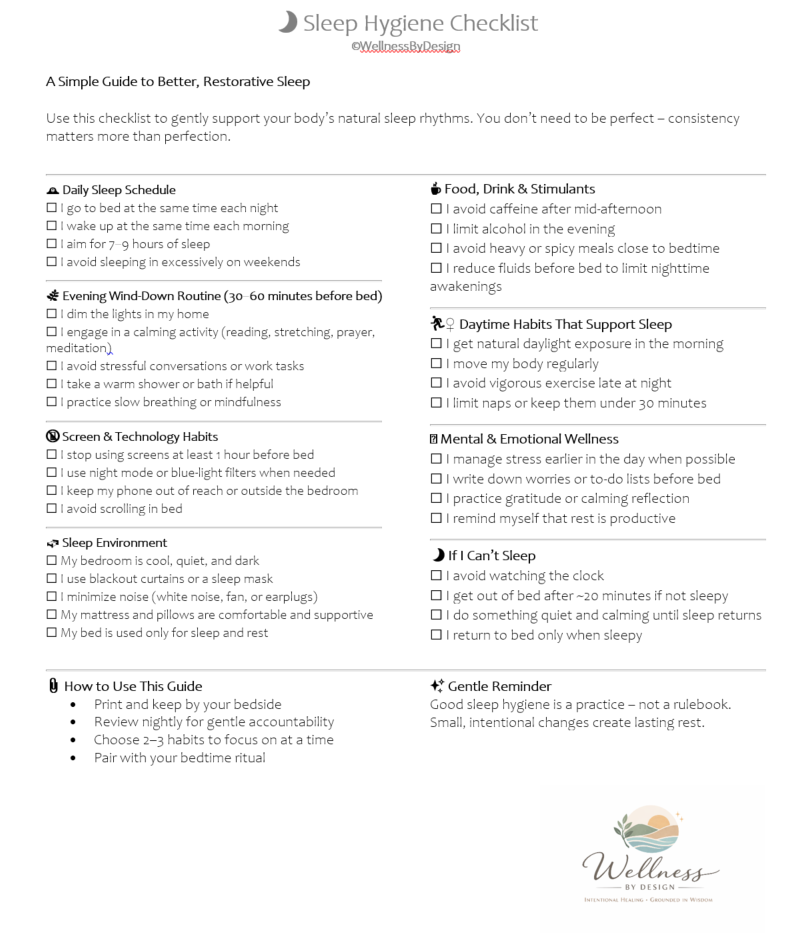
Rest is not a luxury - it’s a foundation. This sleep hygiene checklist offers gentle, intentional habits to support deeper, more restorative sleep.
